

Post-close advisory should be a regular part of how your firm sells. Bring it up during diligence, return to it as findings emerge, and put a specific proposal in front of the buyer before everyone moves on.
Your team has spent weeks understanding the business. You know where the numbers needed explaining, which adjustments mattered, and what the buyer should watch. Closing is a natural point to turn that knowledge into the next piece of advisory work.
AI and automation give firms a reason to revisit the economics. When updating the financial schedules takes less preparation, a smaller recurring engagement may become worth pursuing.
Keep the conversation going before the team moves on
A firm can have a broad advisory offering and still finish a deal without a clear next step. The report goes out, the buyer turns to integration, and the diligence team moves to another transaction. “Let us know if you need anything” leaves the client to define the work.
The findings give you a more useful place to start. If diligence flags a collections issue, ask how the buyer will track it after closing. If an adjustment depends on management’s plans, ask who will assess whether those plans translate into results.
Raise those questions as they emerge. By the final discussion, you should know which ones matter enough to revisit, who owns the budget, and when the buyer will need an answer. If the work belongs with your firm’s CAS or another advisory team, make the introduction while that context is fresh.
Give the buyer a specific next engagement
Consider a buyer three months after an acquisition. Earnings look broadly on plan, but cash is lagging. During diligence, your team identified slower collections. The buyer now wants to understand whether that issue is improving or getting worse.
That gives you a concrete proposal: a Quarterly Acquisition Review covering earnings against the diligence baseline, cash conversion, and agreed issues to monitor, followed by a review call.
The value is in the explanation. Is cash tied up in older receivables? Has the customer mix changed? Did a reporting change distort the comparison? Those questions give management something to investigate and act on.
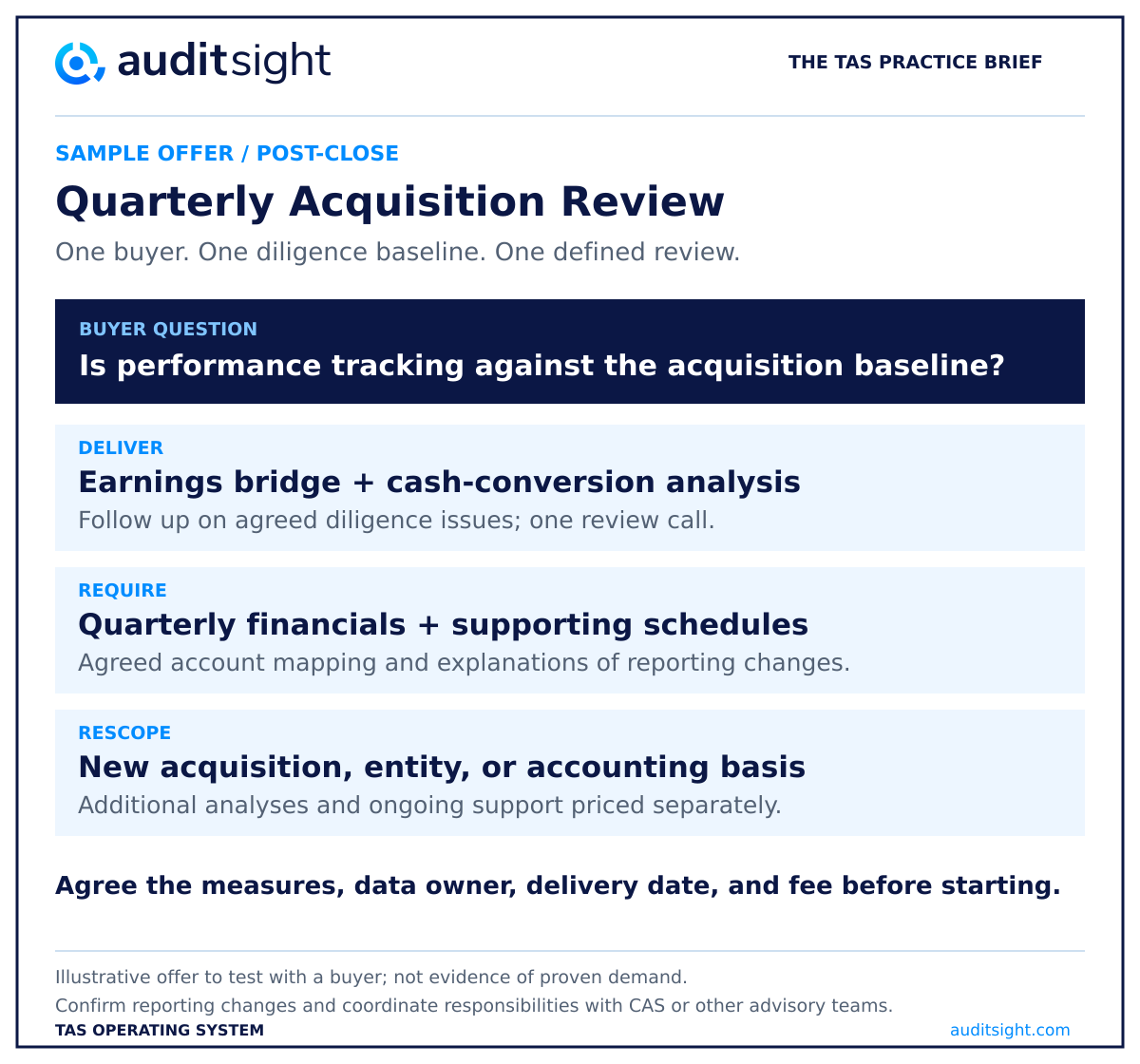
Agree the inputs, deliverables, fee, and review date up front. Reassess the diligence adjustments each quarter and check whether accounting or reporting changes affect comparability. A new acquisition or entity may require a new scope. Confirm where the buyer needs help beyond what its finance team already provides.
Take the grunt work out of the update
Audit Sight helps teams refresh their firm’s databooks with new accounting data. As new periods are imported and mapped, teams can rerun the databook instead of manually rebuilding the reported schedules.
We use deterministic software to populate the numbers into the firm’s template. That gives the team an updated set of reported financials to work from. Your professionals still review the output, reassess adjustments, investigate movements, and draw the conclusions.
For the quarterly review above, that means less time assembling the workbook before the analysis can begin. The team can focus more of its effort on understanding the collections issue and preparing for the client conversation.
That is the commercial opportunity: use automation to make useful follow-on work easier to deliver. If preparation costs kept an offering off the table before, revisit it.
Revisit the quarterly economics
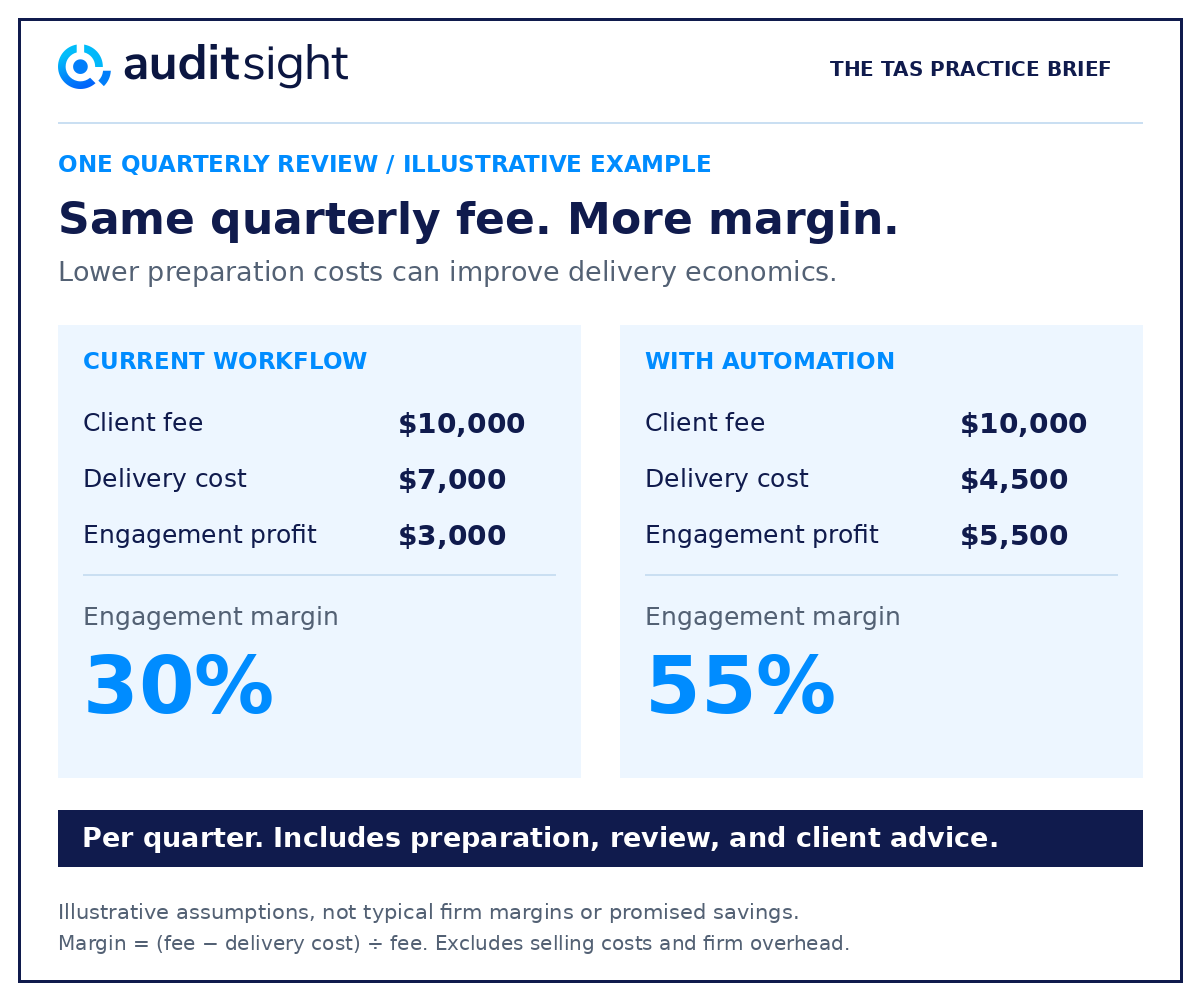
Consider one quarterly review with a $10,000 fee. In this illustration, delivery costs fall from $7,000 to $4,500, including preparation, review, and client advice. Engagement profit rises from $3,000 to $5,500, taking the margin from 30% to 55%.
Make it part of how the practice operates
Pick one current or recently closed deal. Identify a question the buyer still needs answered, test the refresh, and put a scope and fee in front of them. Set the next conversation before everyone’s attention shifts.
Every deal should have an owner for the post-close conversation, a next step, and a date. Keep asking what comes next. Keep proposing specific work. Audit Sight’s databook automation helps take preparation off the team’s plate so more of that work can be worth delivering.
Explore databook automation inside the TAS Operating System.
T.C. Whittaker, CPA
Co-Founder & CEO, Audit Sight
Get the next brief.
Deal delivery, AI, and practice management. Free, every Saturday.
Get the Saturday brief

